

Sensory Play to help with Anxiety

When my kids were little I became obsessed with sensory play. So much that I turned my basement into a sensory play oasis and called it “Messy Play”. I did preschool classes, a dayhome, Mommy needs a Break respite and parented sessions.

Here is an example of one of the parented classes. I would set everything up to look clean and inviting….let the kids/parents play and create together…and then I would clean up the mess.

Waterbeads and a play kitchen

Sand (was always a favorite)

Homemade Playdough with fun tools to create monsters.

Learning Puzzles

Alphabet stickers

Markers with a long roll of paper

Chalkboard. Sometimes adding in paint brushes with water.

Magnatiles

Blocks

Paper clip/Magnets on light table

Painting with rollers/brushes turned into painting animals

Then we needed to wash animals…🦄🦕🦈

And at the end we brought in a big bucket of real SNOW which was super cool to play with while warm inside.

We then spray painted the snow with water colours!

It was always real cool for kids that were a bit shy to slowly start to take interest in the centers.

Benefits for Anxiety

“There’s something about different tactile things that actually creates a sense of mindfulness” says Tracy Turner-Bumberry, a licensed professional counsellor and play therapist. “Sensory play helps children focus on what’s happening right now and tune out past sadness or future anxiety. They notice that right in that moment, they’re touching something that feels so good in their hands.”

In childhood development, sensory play promotes inclusive, open-ended play that helps develop skills, promotes self-regulation, encourages exploration, enhances problem-solving abilities, and nurtures creativity.
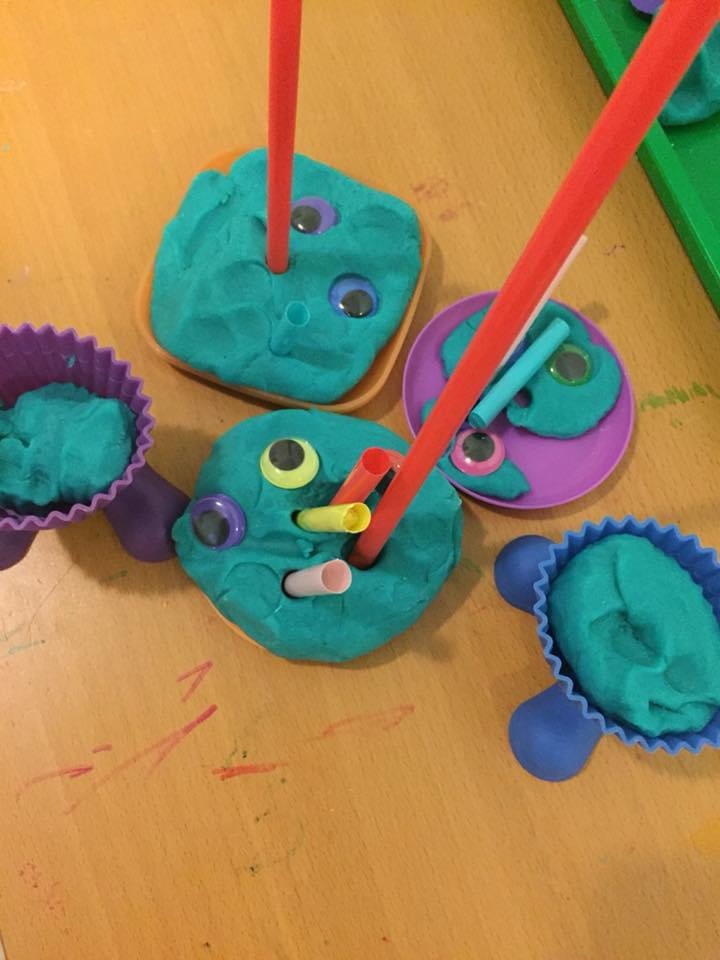
Playdough is my favorite!

Touch:

For kids struggling with anxiety, tactile experiences can provide calmness. Encourage your child to explore different textures through activities like playing with kinetic sand, finger painting, or squishing stress balls. These tactile sensations can help ground anxious children in the present moment, providing a sense of comfort and stability.

Sight:

Can choose to create a calm and inviting environment for your child by incorporating soft lighting, soothing colors, and visually appealing elements like posters of nature scenes or twinkling fairy lights.

Sometimes just seeing an invitation to play and create is enough to draw them in. Engaging in visual activities such as drawing, paint mixing, coloring, or watching calming visualizations can help distract anxious minds and promote a sense of peace and relaxation.

Having a sand box at home when my kids were little was so fun!

Auditory senses: Sound has a profound effect on children’s mood and mindset, making it a valuable tool for managing anxiety. Introduce your child to calming soundscape playlists, nature sounds, or guided meditation recordings designed specifically for kids. Encourage them to listen to these soothing sounds during moments of stress or before bedtime to help calm their racing thoughts and promote restful sleep. In my classes it was more of an uplifting energetic music mostly. And would create playlists of different kids music for different holiday classes.

Aromatherapy: The power of smell can create a calming oasis for your anxious child. Experiment with child-safe essential oils like lavender or chamomile diffusing them throughout your home. The gentle aroma of these oils can help relax the mind and body. I would often have something to “smell” in my messy play classes. Whether it was lemons/limes in the water table, adding in lavender to play dough, playing with coffee grounds etc. One of the funnest days we had was using up a bunch of old spices and mixing them into play dough.

I encourage all parents to give sensory play a try. It can even be relaxing and fun for us to ground and just be in the moment. There will be some sensory play stations set up at the T1D Family picnic this summer! If you live near Red Deer and want details for in person events join my group here.

Lana Smid

Decision Fatigue with type 1 diabetes management

Decision Fatigue

The continuous need to make critical health decisions daily.

This story below is an example of me in overwhelm decision fatigue mode.

What once was fun and carefree now has a lot of stress to go along with it. This was a couple years ago and I am thankful that with time and practice going out for icecream is not as scary as it was for me then.

How many carbs in this ice cream cone?

One summer day

One day a couple years ago our family decided to go for ice cream. What once was fun and carefree had become a source of stress for me.

Looking at the chalboard with a hundred options (see pic below) gave me overwhelming anxiety.

As soon as I looked at it I felt panicked over what decision to make. I was frozen. My husband was asking me what size of ice cream we should get our kids with type 1 diabetes.

I could not even look at the board. I started to tear up and told him that he needed to make the decision because I just could not.

I was NOT READY to make a decision. In my head I had all these questions below:

So many questions

What is their blood sugar now?

Is their going to be activity after the ice cream?

Guessing how many carbs in a 1 scoop and a 2 scoop?

What will the impact of the fat be?

Do I need to extend?

How long of a pre bolus does this need?

I dont remember what happened to their blood sugar that day. But I do remember exactly how I felt. Even writing this my throat feels a bit tight.

Self Compassion

One thing I have learned a lot about is self compassion. I am someone that hates to make mistakes. But I have learned I am human and that I need to treat myself the way I would a friend.

Moral of the story is diabetes can be overwhelming and you are not alone if you are struggling💙

Very overwhelming for me to make a decision!

Lack of Control

Another theme that has come for me has been “Lack of Control”: The unpredictability of T1D can make us moms feel out of control, exacerbating our stress and anxiety.

One thing that has helped me with this is the book “Sugar Surfing”. We dont always know the outcome but we can make micro adjustments when we do end up making a decision that leads to out of range blood sugars.

My goal is for my kids blood sugars to be meeting the targets. Not perfect. Some days are great and some days are a dumpster fire lol.

Community

Being in a community of like minded moms is powerful. It is such a powerful way to receive support and is motivating to keep on learning new skills.

I am excited for The T1D family picnic in Red Deer this summer! My goal is to make it fun for kids of all ages and for adults to make connections. And to lower the decision fatigue I will have snacks all carb counted to make it ONE LESS THING TO THINK ABOUT!

If you would like to come to the T1D family picnic in Red Deer this summer you either click on the Facebook group for information or send me an email at doingdiabetesdifferent@gmail.com

If you can relate follow along as I share more about T1D mom life and balancing all the overwhelm and feelings of anxiety that come along with it.

With love,

Lana

The Crucial Role of Mental Health Support for Parents Navigating Type 1 Diabetes in Children

Living with a child diagnosed with type 1 diabetes can be an emotional journey for parents. Beyond the daily management of the condition, the emotional toll it takes on parents is profound. Understanding and addressing the mental health needs of these caregivers is as crucial as managing the physical aspects of the condition. In this blog post, I talked about the importance of mental health support for parents navigating the complexities of type 1 diabetes in their children.

Emotional Impact:

The diagnosis of type 1 diabetes in a child often triggers a whirlwind of emotions for parents – shock, fear, guilt, and even grief. Coping with the constant vigilance, fear of hypoglycemia or hyperglycemia, and the long-term impact of the condition can take a toll on mental well-being. When my son was diagnosed I cried daily for weeks. Most times I tried to hide it but there were some days when he was upset that we would cry together.

When my daughter was diagnosed 14 months later it was and traumatic emotional period in our lives. We did not have to go through all the learning again but the emotional impact was just as hard.

Thought out the years I have gone through the stages of grief.

Grief:

Shock and Disbelief:** Initially, there might be shock and disbelief, struggling to accept the reality of the diagnosis. It can feel surreal, as if it’s happening to someone else.

Overwhelming Sadness:There’s often a profound sense of sadness, mourning the loss of the child’s previously perceived ‘normal’ life, and coming to terms with the challenges ahead.

Fear and Anxiety: There is so much fear and anxiety about the uncertainty surrounding diabetes, handling school, severe lows, dka, your Childs mental health, sleepovers, worries about them getting teased/bullied, worries about their future health, and the fear goes on and on.

Sense of Loss: You may experience a sense of loss for the life you imagined for your child, grieving the absence of a carefree existence without the complexities of managing a chronic illness. I remember feeling a huge longing to go back to “the day before”. We have a picture of my son in the car looking at a book while we were getting gas. Whenever I look at that picture I wish for “before”

Guilt and Self-Blame: Some might grapple with feelings of guilt or self-blame, questioning if they could have done something differently to prevent the condition. I know that there is not anything I could have done differently but in the beginning it was on my mind for sure.

Overwhelming Responsibility: There’s a sudden overwhelming responsibility to navigate the complexities of the condition and provide the best possible care for their child. I have always been a responsible person and I think being a nurse and seeing patients with the consequences of uncontrolled diabetes has heightened my feeling of responsibility.

Isolation and Loneliness: This journey can feel isolating, as others may not fully understand the emotional turmoil and challenges faced by us. They will ask “Is it stable yet?” Why do you not get full nights sleeps? In the beginning I was often angry when people would say things that were just not true about type 1 diabetes. I have now accepted that others will never understand as they are not living it. And that is ok. I will still do my best to educate but it is The T1D community where I feel a sense of belonging.

Stress and Burnout:

The relentless demands of managing diabetes – monitoring blood glucose levels, administering insulin, tracking food intake, and ensuring a balanced lifestyle – can lead to chronic stress and burnout in parents. This stress affects not only their mental health but also their ability to provide effective care for their child.

Importance of Support Systems:

The level of support for parents is not equal depending where we live. I am extremely grateful that we live where we do and we have resources like private insurance for counselling. When the kids were diagnosed we had some counselling for them and for myself. Throughout the years we have accessed professional help a few different times. Establishing a support system is essential for parents. Connecting with other caregivers facing similar challenges through support groups or online communities can provide a sense of belonging and understanding.

Back to therapy. I highly recommend it and I think all parents would benefit from the right professional to talk to. Going through a diabetes diagnosis is TRAUMATIC. Even more so if your child was in DKA and needed to stay in ICU.

I recently attended a conference called Kids n Us. The guest speaker Dr. Tracy De Boer explained different reasons for needing counselling. First obviously is for when you are in emotional/mental distress. Secondly though can just be for maintaining and preventing relapses. Lastly she mentioned you can receive help for “Levelling up” which I thought was a neat concept.

Strategies for Self-Care:

Encouraging self-care practices among parents is crucial. From mindfulness techniques to engaging in hobbies or activities that bring joy, prioritizing their mental health allows parents to better support their child with diabetes. I often felt like my anxiety was contagious. When I was struggling my kids struggled more. When I worked on my emotional reactivity, anxiety and depression I became calmer. I was not yelling as much or running to my bedroom slamming the door. Being a role model to them is important to me. So if I show that I am important to take care of I hope they will feel the same about themselves.

For me self-care has evolved. When I first when on a stress leave my psychologist encouraged exercise. I had gained 60 pounds from stress eating and not being active. I needed to get myself healthy. I feel much better when I eat healthy. Avoiding sugary drinks, sweets, fast food as much as possible. I also ended up giving up coffee. The caffeine seemed to have me more on edge and I have switched to drinking green tea. Everyone is different so explore what strategies you enjoy and what are the things that make you feel at your best.

Conclusion:

The mental health of parents caring for a child with type 1 diabetes is an integral part of holistic care. Our emotional, mental, spiritual health and environment all impact us. Addressing the emotional well-being of us as caregivers is essential for our own health and for providing the best possible support to our children. Through proactive support systems, self-care practices, and open communication, parents can navigate this journey more resiliently, ensuring a better quality of life for both ourselves and their children. Diabetes is hard. My motto is if something is not working try something different.